How to Read a Ferry Timetable: Sailing Codes, Check-In Times and Seasonal Changes
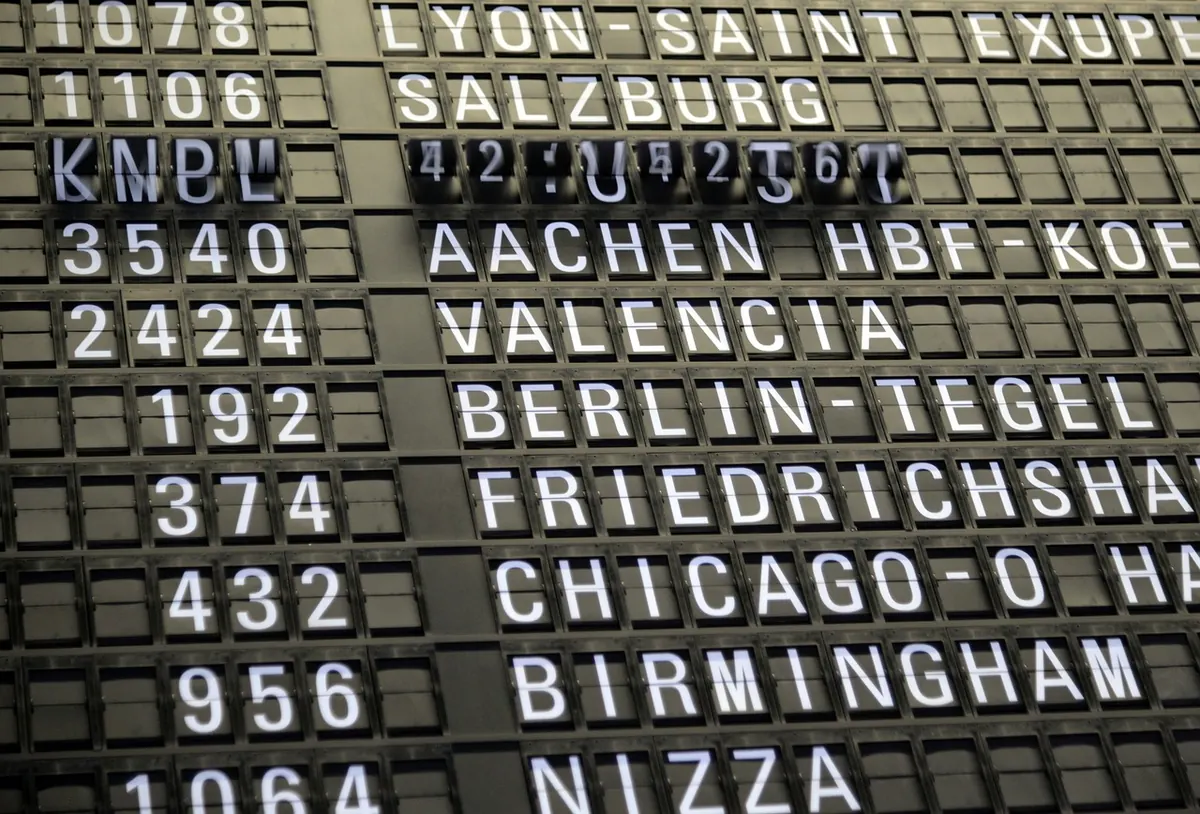
A ferry timetable looks reassuringly like a bus timetable until you try to use one. Then you notice the letters above the columns, the footnote about foot passengers, the fact that the same crossing leaves at a different time in July — and the nagging question of whether the 14:30 sailing to Cherbourg connects with anything at the other end.
Read properly, a timetable is not a list of times. It is a plan, and it answers three questions: which days does this sailing run, when do I actually need to be at the port, and how much slack have I got once I step ashore?
Most people scan straight to the departure column and then hunt for their date. Do it the other way round. Above or beside the timetable there is usually a row of letters — M T W T F S S — or words such as Daily, Mon–Fri or Sat only. That row tells you which sailings exist on your day. A sailing printed in grey, struck through, or marked with a dash is simply not running.
Watch for the exceptions printed in small type underneath: “except 25 December”, “no service 1 January”, “operates 1 May–30 September”. Peak-season extras are often listed in a separate block, so a route that shows four sailings in November may show ten in August.
Every operator uses its own shorthand, and the key is nearly always at the bottom of the page or behind a link marked “timetable key”. These are the ones that turn up again and again:
Departure and arrival times are always given in local time at the port concerned. That single rule explains most of the confusion. A Dover–Calais sailing leaving at 10:00 and arriving at 12:30 looks like two and a half hours, but it is a 90-minute crossing: France is an hour ahead, so the clocks do the rest. Crossings to and from the Republic of Ireland are the straightforward ones — same time zone as the UK, no arithmetic required.
The printed duration is also a berth-to-berth figure. It does not include the time to disembark, clear the terminal and reach the road or station. On a busy arrival that can easily add 30 to 45 minutes for vehicles, and rather less for foot passengers, who usually get off first. Weather, tides and port congestion can push a crossing longer, especially on exposed routes in winter.
The departure time is not the time that matters. The check-in time is. As a rough guide, foot passengers are often asked to be at the terminal 30 to 60 minutes before sailing and vehicles 45 to 90 minutes, but the range is wide: ports with full vehicle screening can ask for considerably more, while small island routes may ask for ten minutes.
Two things follow from that. First, book your onward journey around the check-in time, not the sailing time — a 07:00 ferry with a 60-minute check-in means being at the port for 06:00. Second, treat a missed check-in as a no-show. Most operators will move you to a later sailing if space allows, but they are not obliged to, and the terms of your ticket decide whether anything is refunded. If you are travelling on a foot passenger ticket, check whether the route allows you to be flexible on the day.
Ferry schedules are usually revised twice a year, in spring and autumn, with extra sailings laid on for summer and a thinner service through winter. Some seasonal routes do not operate at all outside a defined window, and a few winter services run only on certain days of the week.
Practically, this means three things. The timetable you saved last summer is not the one running this year. A crossing that suits you in June may simply not exist in February. And if your travel dates sit near a revision date — or near the clock changes in March and October — confirm the times again a few weeks before you sail, rather than trusting a screenshot from booking day.
If the ferry is one leg of a longer journey, decide how much risk you are willing to carry.
Do that once and the timetable stops being a puzzle. You will know exactly which ship you are on, when to be at the port, and how much room you have left for the rest of the journey.
Photo: wal_172619 / Pixabay
Previous Post
Last-Minute Ferries to Ireland: Common Booking Mistakes and How to Avoid Them
Next Post
The Best Time of Year for a Scottish Island Ferry: A Seasonal Planning Guide